



 Home
HEREDIS: Assassin’s Creed Takes to the Stage

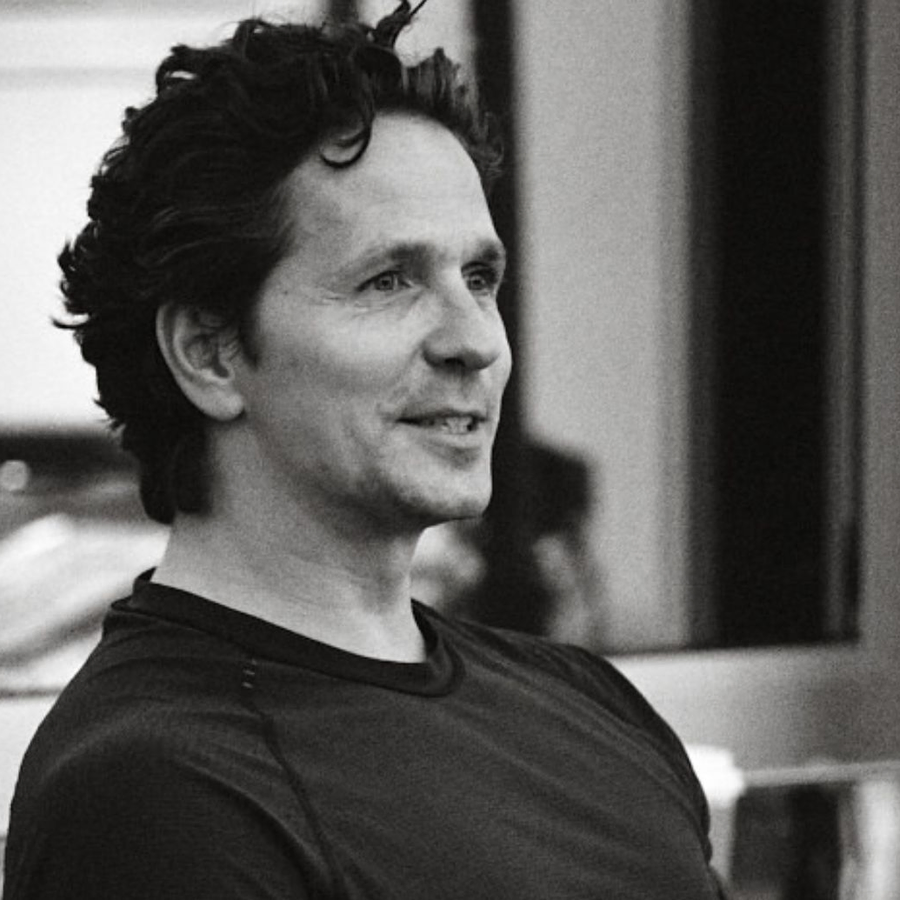
Seven years in development, 17 artists, breathtaking fights, and digital worlds as far as the eye can see: with HEREDIS, The 7 Fingers brings the universe of Assassin’s Creed to the stage. An interview with its writer and director, Sébastien Soldevila.
How does one become an assassin? Since Ubisoft’s Montreal studios launched the first Assassin’s Creed in 2007, millions of gamers have donned the white hood of the brotherhood, yet the games have never truly explored this question. Sébastien Soldevila took it upon himself to address it. Together with Olivier Kemeid, his partner from Pub Royal, he has created an original story for The 7 Fingers. “It’s the equivalent of The Mandalorian in Star Wars,” explains the director. “We’re completely immersed in that world, with its own set of rules, but it’s a parallel story.”
But why Assassin’s Creed? First and foremost, for its powerful narratives. The saga is brimming with lineages, conspiracies, and interwoven centuries. “This isn’t a game like Mario Kart or Fortnite, where you’re just there to have fun,” Soldevila emphasizes. “The storytelling is vast, and that’s what we drew from.” Hence, a story written like a play, with its antagonists, its quest, and its dramatic structure.
The adventure took seven years to come together, beginning—believe it or not—with a project based on Raving Rabbids, another Ubisoft brand—a project that ultimately never materialized. “At The 7 Fingers, we’ve been close to Ubisoft for years,” explains Soldevila. “Some of their people have even served on the board of our foundation.” Ubisoft is, in fact, a co-producer of the show. The world premiere takes place in Montreal, with performances in Paris in January.
Ancestral DNA
For those who’ve never held a controller, a brief recap is in order. In the Assassin’s Creed universe, a machine—the Animus—allows us to relive the memories our ancestors have left inscribed in our genetic material. The player embodies a modern-day character who slips into the role of an assassin from the Italian Renaissance or the French Revolution, among other eras. Soldevila took this concept and put his own spin on it. Naël and Lucas, two half-brothers, receive a letter from their father, who disappeared eight years ago, drawing them and their friends Léna and Renaud into a mysterious program and, from there, through the centuries. Which eras? That’s a secret.
The Latin word Heredis means “inheritance.” “Beyond Assassin’s Creed, it raises the question of whether we are condemned to become what our ancestors destined us to be,” says Soldevila. “Can we deviate from it? Or must we embrace it?” A big question indeed, when one inherits a brotherhood that defends free will through the sword, a brotherhood that has been waging a secret war against the Templars for centuries. “Nothing is true, everything is permitted,” is its creed. The two brothers, for their part, will have choices to make.
But don’t panic if you can’t tell a Templar from an Assassin. “It’s a show for everyone,” insists Soldevila. “But those who love the game will recognize things that others won’t. This is not cosplay.”
From the Rooftops to the Stage
Born in the French suburbs, parkour is the very essence of play. Millions of athletes have scaled cathedrals using the tips of their fingers. Now, this show brings parkour back, in the flesh, with real bodies, real jumps, and real risks. The 17 performers in the cast add acrobatics and fights, choreographed by stuntman Jean-François Lachapelle. No throats will be slit, and children are welcome. “But the realism of the fights is incredibly intense. I didn't want it to resemble theme park shows, where you don’t believe it for a second.”
Circus arts, a company specialty, are woven throughout the show, from hand-to-hand acrobatics and banquine to an apparatus invented especially for the occasion—the “planchine,” a board mounted on bungee cords that could have existed in our ancestors’ time. “The word isn’t in the Petit Larousse dictionary,” Soldevila points out.
The game is also famous for its meticulously recreated cities. Behaviour Interactive remodeled sections of these digital worlds using Ubisoft’s files, in addition to creating others, which are projected onto giant screens. Not a single image was generated by artificial intelligence, the director insists. “We trusted the artisans.”
Fans are sure to go nuts over it all. Others will simply have to let themselves be drawn in.
Upcoming Event
-
Circus • Acrobatics
HEREDIS, un spectacle Assassin's Creed
December 5 to 20, 202616 performancesThéâtre MaisonneuveThe 7 Fingers bring the iconic world of Assassin’s Creed to life. On stage, 17 performers deliver breathtaking acrobatics, parkour, choreographed combat, and extraordinary physical feats against a backdrop of spectacular environments.


Midsummer Night Dreams by Guillaume Côté: Love, set free
For his first collaboration with Les Grands Ballets, Guillaume Côté tackles Shakespeare’s most enchanted comedy, which he pluralizes as Midsummer Night Dreams, letting a magical nectar gradually disrupt the codes of classical ballet... and those of love.
Article Interviews Artist
Symphony of Life: An Orchestre Métropolitain Concert in Natural Symbiosis with the Film Murmurs
Marie-Julie Dallaire’s film murmurs will have a lavish premiere: a screening, with its original score performed live by the Orchestre Métropolitain under the direction of Yannick Nézet-Séguin. The film’s director spoke to us about how it came to be.
Article Interviews Event
Les Quatre Saisons du Québec: Musical Pleasure According to François Dompierre
Article Interviews Event
Kim O’Bomsawin: Telling Stories to Bring People Together
Abenaki sociologist, filmmaker, documentarian, and screenwriter Kim O’Bomsawin will be the curator of the next edition of the Micro ouvert autochtone. Learn more about this profoundly human creator.
Article Interviews Event
Victoria May | Place des Artistes
Meet the inspiring Victoria May, a Métis choreographer and dancer who recently completed a residency at Place des Arts.
Vidéo Interviews Artist Residence Your favourites
 Email
 Facebook
 Shared events
