


 Home
Home
Aesthetic Education at Place des Arts: 10 Years of Cultural Innovation

For ten years now, Place des Arts’ Education Program has been transforming the way young people engage with the performing arts. More than 45,000 high school students have already taken part in this unique initiative, based on aesthetic education—an approach that remains relatively unknown, but that has yielded remarkable results.
On this 10-year anniversary, we spoke to Marie-Christine Beaudry, Director and Professor in the Department of Language Didactics at UQAM’s Faculty of Education, who specializes in cultural activities in the school context and is a long-time collaborator of the program, to help us understand how this approach profoundly changes how culture is integrated in schools.

Understanding Aesthetic Education
Aesthetic education involves educating through the arts, transforming an encounter with a work of art into a genuine learning experience. Rather than theoretical or teacher-led preparation for a cultural outing, students are instead encouraged to look at works of art, identify what they see, ask questions, compare their interpretations, and then create in turn. Centring their activity around a dance, poetry, or comedy performance, they play with words, gestures, and situations. “Art becomes a shared space in which the adult provides guidance, but where students get to explore, feel, imagine, and construct meaning,” says Marie-Christine Beaudry.
At the heart of this approach, students are no longer just passive spectators: they become active participants. “They seek, experiment, create their own scenes, invent characters, and speak up,” explains Beaudry. This active stance strengthens confidence, develops agency, and gives real value to their thoughts. The effects are tangible. Students rediscover poetry, dance, and theatre as living forms, rooted in their reality. Many discover talents they didn’t even know they had. Others see their classmates differently: a quiet student turns out to be excellent at slam poetry; another, perceived as disruptive, reveals a great sensitivity. These transformations have an impact on the classroom atmosphere, which is often improved for the remainder of the year.
Ten Years of Tangible Impacts
Teachers are also feeling the benefits. Many teachers speak of a “second wind,” a renewed pleasure in teaching, and a sense of being better equipped to integrate the arts into their practice. Place des Arts’ artist-mediators—professionals who use their artistic practice to build bridges between works of art, artists, and students, notably through in-class workshops—are refining their professional approach, developing a shared language with teaching staff, and gaining confidence in their role as cultural guides.
“The strength of Place des Arts’ program lies in the coherence and quality of its overall system of measures: the training of teaching staff, the classroom workshops conducted according to the principles of aesthetic education, and very high-quality shows, with due regard to evaluation and continuous improvement,” says Marie-Christine Beaudry.
This co-construction, supported by high pedagogical standards, gives rise to experiences that are at once artistic, educational, and profoundly human.
“After ten years, one thing is clear: aesthetic education helps develop creativity, critical thinking, inclusion, empathy, and perseverance,” emphasizes Beaudry. It’s a program that renews practices, makes a lasting difference, and, year after year, continues to broaden the cultural and educational horizons of thousands of students.
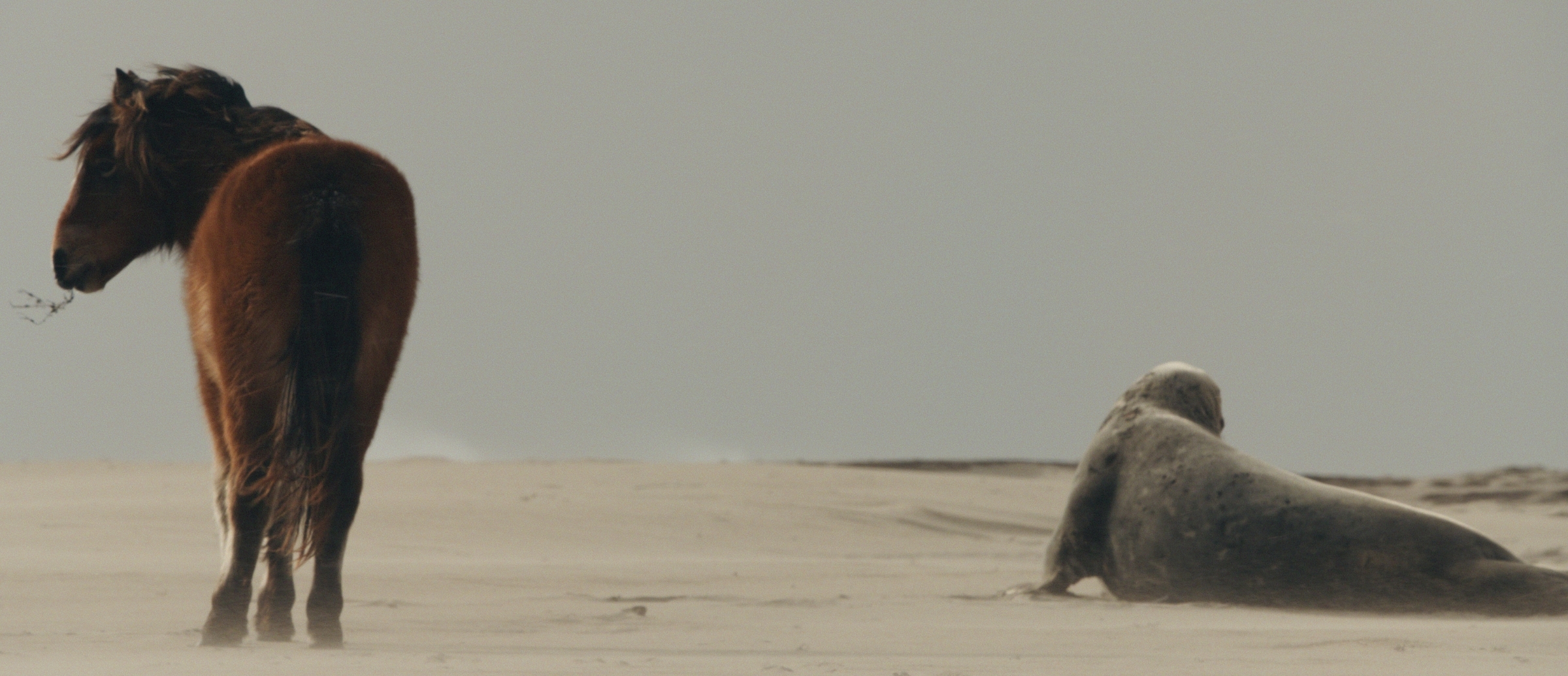
Symphony of Life: The Film Murmurs A Natural Symbiosis with the OM
Marie-Julie Dallaire’s film murmurs will have a lavish premiere: a screening, with its original score performed live by the Orchestre Métropolitain under the direction of Yannick Nézet-Séguin. The film’s director spoke to us about how it came to be.
Article Interviews Event
Christos Papadopoulos: Dance as a Metaphor for Life
This autumn, we’re celebrating the euphoria of being alive with My Fierce Ignorant Step, a captivating new work by internationally renowned choreographer Christos Papadopoulos.
Article Portraits Artist
4 Songs by Maryna Krut: Ukrainian music that bridges the gap between tradition and renewal
Singer Maryna Krut, accompanying herself on bandura, will be in Montreal this November for a show at Place des Arts’ Cinquième Salle.
Article Portraits Series
Thrills, Magic, and Mystery This Fall at Place des Arts
This fall, Place des Arts is bringing you an eclectic program that celebrates Halloween and other fall festivities. Whether you want to dress up, get spooked, or celebrate rich traditions, the season promises to be a very colourful one.
Article Recommendations Event
Children’s Shows at Place des Arts: A Wonderful Opportunity to Build Precious Memories
More than ever in 2026, Place des Arts is your go-to family destination. With a rich and varied program for young audiences, it offers families much more than just entertainment.
Article Recommendations Family Your favourites
 Email
Email
 Facebook
 Shared events