



 Home
Home
Michel Fugain: A Wonderful Story in 5 Songs

Michel Fugain has had a deep love affair with Quebec, cherishing its people, who have returned the sentiment for over 50 years. With his new tour, which includes 10 evenings at the Cinquième Salle, he promises to take audiences on a journey between memories of Le Big Bazar and the world of tomorrow, in a characteristic atmosphere of joy and humanity. We joined him on this journey, song by song.
Une belle histoire: How does one go from medicine, to cinema, and finally to songwriting?
Michel Fugain: It was a series of coincidences. I initially left medicine to pursue filmmaking after meeting director Jean-Michel Barjol when I was 21. I quickly found work on film sets, notably with Yves Robert, but I didn’t really feel at home there. I’m a team player and I didn’t have any close friends. I also wasn’t a fan of the rigid hierarchy within film crews.
So, I signed up for a drama class to meet people. That’s where I became friends with Michel Sardou. One evening, he told us he wanted to audition for Barclay Records. He had some lyrics, so we said, “We’ll write your songs for you.” The next day, I picked up my guitar, started composing, and discovered that melodies came to me naturally. We never went back to the class.
I was then introduced to Pierre Delanoë, who selected two of my compositions for Hugues Aufray. Later, when I offered a song to Marie Laforêt, her artistic director said to me, “If you like, I’ll have you sing it.” I thought to myself, why not? And from then on, I never wrote songs for anyone else again.
Chante: What is the secret to longevity, both for an artist and for a song?
M.F.: In every artistic profession, you must be as close as possible to who you really are. Being an artist is a very particular profession: you must first be completely vulnerable.
What does it mean to be an artist in a society? If it simply means being self-absorbed, it’s pointless. The role of an artist is to be a facet of his people, of his audience.
And for a song, it’s much the same. Almost 60 years later, how can you still sing Je n’aurai pas le temps, written in 1967? The enjoyment must remain undiminished! I don’t feel like I’m dragging out an old song. I don’t think people leaving the show feel like they’ve seen an old show. Rather, they’ve taken a trip down memory lane.
Fais comme l’oiseau: You’ve made many trips between France and Quebec over the course of your career. You hold the attendance record for a French-language show at Place des Arts, having filled Salle Wilfrid-Pelletier for 21 consecutive evenings in 1974. What is your greatest memory of it all?
M.F.: It was the first time we came over. We arrived in January, and a metre of snow had fallen overnight. Being good French people, we thought, “No one will show up, that’s for sure.” And yet, by showtime, people had arrived on snowmobiles and snowshoes. An image I’ll never forget: in the lobby at Place des Arts, everyone was putting down their things—rain gear, boots, everything neatly arranged—and when they left, it was all still there. I said, “That would be impossible in France. It’s unimaginable.”
But that’s the people of Quebec—and not just the audience. They don’t have to cheat. They’re not ostentatious, they have a spontaneity that I love.
Attention mesdames et messieurs: You’re returning to the stage at Place des Arts, but for 10 nights at the Cinquième Salle, what can we expect?
M.F.: I’m not returning to the stage, I never got off. This is a special tour, especially because the musicians accompanying me are from Quebec—and they’re not just any Quebecers, they’re Robert Charlebois’ extraordinary musicians. In fact, I told him on the phone: “I stole your musicians.”
I don’t want to hide the musicians, quite the opposite. I want them to be seen, because their energy is beautiful. And the staging takes that into account.
There will also be photo and video archives to tell the stories of the songs. I also talk about Le Big Bazar.
And then, I’m familiar with the Cinquième Salle: I’ve already performed there with La causerie musicale. I loved that intimacy, because you have the people right in front of you. Me, I want to see people.
Jusqu’à demain peut-être: What inspires you today? What do you want the world of tomorrow to remember about you?
M.F.: At 84, I can talk about tomorrow, but not the day after. That’s life, that’s how it is. I’m not obsessed with death, even if I think about it every day.
I nevertheless continue to prepare for what comes next. I’m still searching for the ending. I still have songs to write, at least an album, or perhaps a six-song EP.
The inspiration is still there, even if it’s becoming more difficult. I also don’t want the ending to deliver a message that’s too somber. I don’t want to leave behind just a simple goodbye. I’ve already conveyed that message in the show, with a song called Je laisse, a sort of testament.
That may be the song that gets the most applause in the show, because it touches on something universal: what do we leave behind? What do we pass on? That’s also what songs are for. Me, I’m one facet of an ordinary man.
Upcoming Event
-
French Song
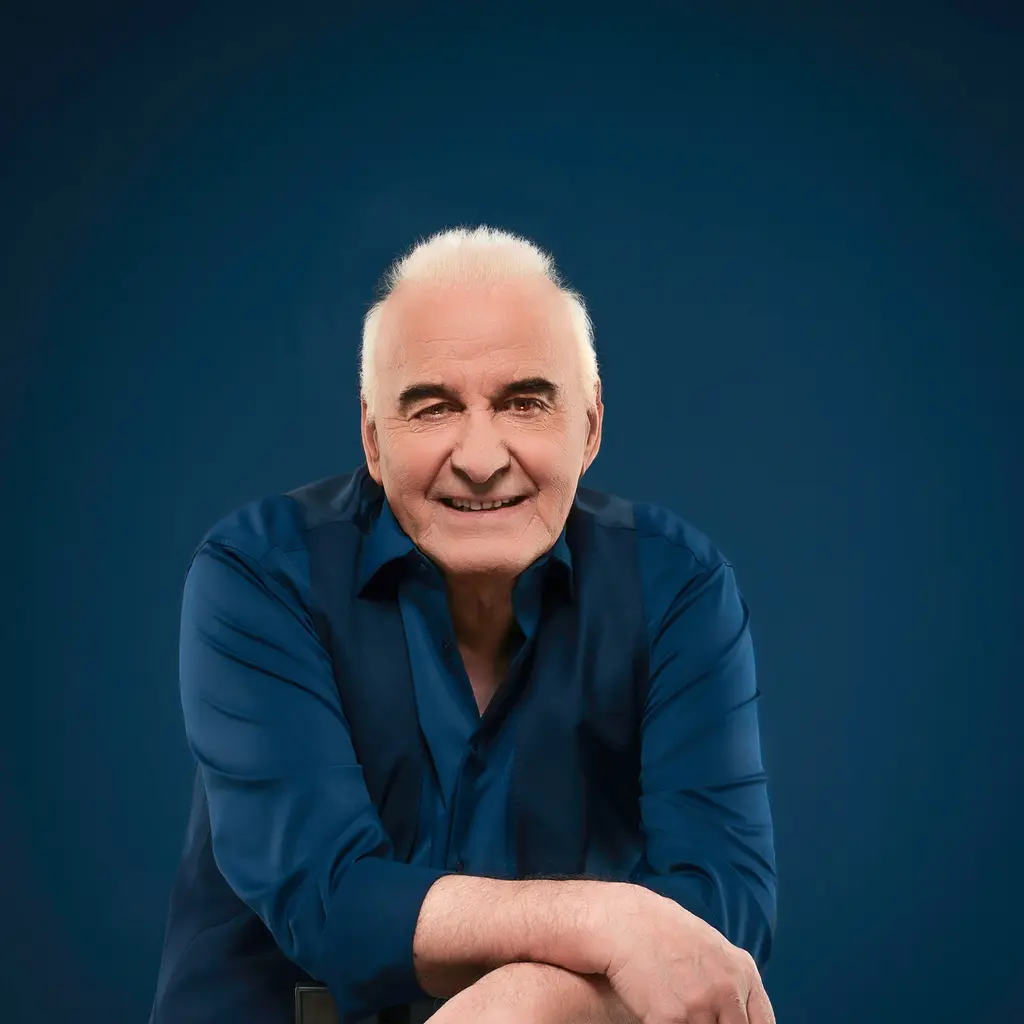
Michel Fugain | C’est l’Histoire d’une Belle Histoire
April 8, 20271 performanceSalle Wilfrid-PelletierFor over 50 years, Michel Fugain has been taking us on a journey into the world of tomorrow.
 New date added

Les Quatre Saisons du Québec: Musical Pleasure According to François Dompierre
Article Interviews Event
Kim O’Bomsawin: Telling Stories to Bring People Together
Abenaki sociologist, filmmaker, documentarian, and screenwriter Kim O’Bomsawin will be the curator of the next edition of the Micro ouvert autochtone. Learn more about this profoundly human creator.
Article Interviews Event
Victoria May | Place des Artistes
Meet the inspiring Victoria May, a Métis choreographer and dancer who recently completed a residency at Place des Arts.
Vidéo Interviews Artist Residence
Gala de la Terre: A Concert in the Heart of Nature to Protect the Banks of the St. Lawrence River
To open the Festival de Lanaudière, the Orchestre de l’Agora, under the direction of Nicolas Ellis, is inviting the public to the 4th edition of its Gala de la Terre on July 4th.
Article Interviews Festival
 Your favourites
 Email
Email
 Facebook
 Shared events