


 Home
Home
Video Games: From the Console to the Stage

Video games are no longer simply confined to their consoles. Video game worlds are now also taking over major performance venues.
From the epic symphonies of Distant Worlds to the circus feats of Heredis spectacle Assassin's Creed, discover how digital universes are merging with the performing arts to offer something entirely new.
We discussed this new infatuation with internationally renowned conductor Arnie Roth, who is returning to Place des Arts in May with Distant Worlds, an immersive show designed as a collage of the most iconic pieces of music from the cult saga FINAL FANTASY.
Music in Which Anything is Possible
According to Arnie Roth, interactivity is what distinguishes video game music from film music. “Depending on what the player does,” he explains, “it determines the path taken to complete the game... and the music one hears.”
In other words, the music does not accompany a linear narrative, but unfolds according to a multitude of choices, trajectories, and dividing points. In a role-playing game like FINAL FANTASY, where the player “becomes” the character, “you therefore find yourself linked to the music associated with your character, your battles, and the worlds you traverse,” the conductor points out.
“That’s why this music is so expensive to produce,” he continues, “because it has multiple branches. There are all sorts of different paths, and a distinct piece of music accompanies each one.”
From “Gamer” Culture to Culture, Period
Having toured the Distant Worlds: Music from FINAL FANTASY show around the world for close to 20 years, Roth has noted an increasing institutional recognition of video game music.
Venues, he says, program these kinds of concerts because they attract a new audience. The question is no longer whether this music is legitimate, but rather how it can “pollinate” another generation of music lovers.
“Can a score by Nobuo Uematsu be juxtaposed with works by Bruckner or Schubert? Without a doubt, the answer is yes,” he says decidedly.
The conductor also believes that video game music, which primarily draws gamers, also offers a great opportunity to introduce a new audience to orchestral music. “We sell out the venues, and many of the people who come see us are attending a classical concert for the first time,” he says.
Would they then come out to hear Stravinsky? It’s hard to say. “But I have often argued that all video game music composers draw upon the legacy of those who came before them,” the conductor points out. “When I listen to Uematsu’s music, I hear Prokofiev, I hear Tchaikovsky, I hear all the influences that fuelled his writing.”
In short, an entire musical culture is reinvested in interactive worlds. And if culture is defined by what we share, what we can hum and recognize, then these themes have already earned their place in the vast repertoire of universal music.
The Avatar Comes to Life
The influence of video games also extends beyond the strictly musical realm to enrich other performing arts disciplines, creating hybrid works in which the boundaries between virtual and physical are blurred.
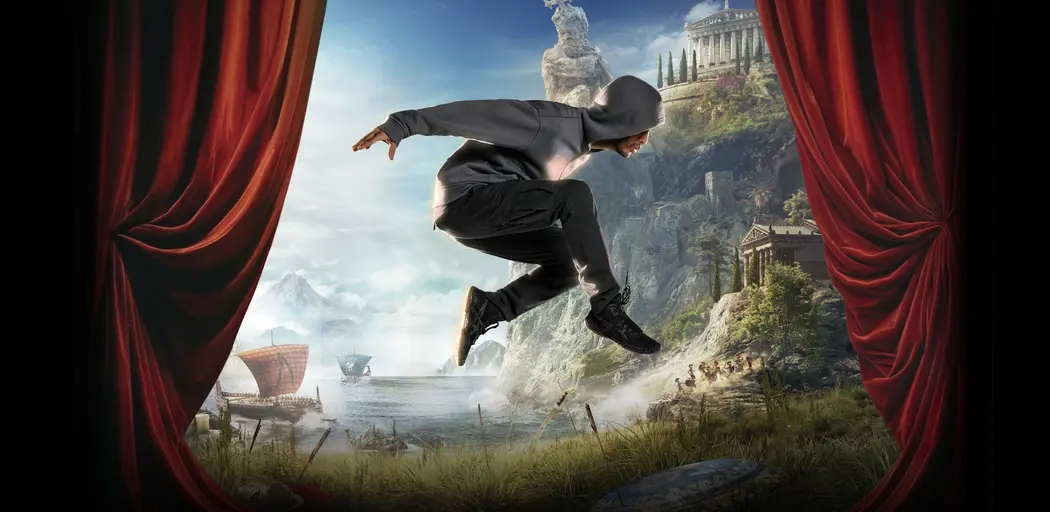
By delving into the world of Assassin’s Creed, the new work by Quebec circus troupe Les 7 Doigts, Heredis spectacle Assassin's Creed, does not merely weave a narrative thread, it transposes the agility and exploration inherent to the game in a multidisciplinary performance that blends high-level acrobatics, technological projections, and immersive storytelling.
This convergence proves that gaming heritage has become a rich raw material that can inspire a comprehensive stage language and redefine our relationship to live performance.
Upcoming Events
-
Circus • Acrobatics
HEREDIS spectacle Assassin's Creed
December 3 to 20, 202618 performancesThéâtre MaisonneuveThe 7 Fingers bring Assassin's Creed to the stage.

Children’s Shows at Place des Arts: A Wonderful Opportunity to Build Precious Memories
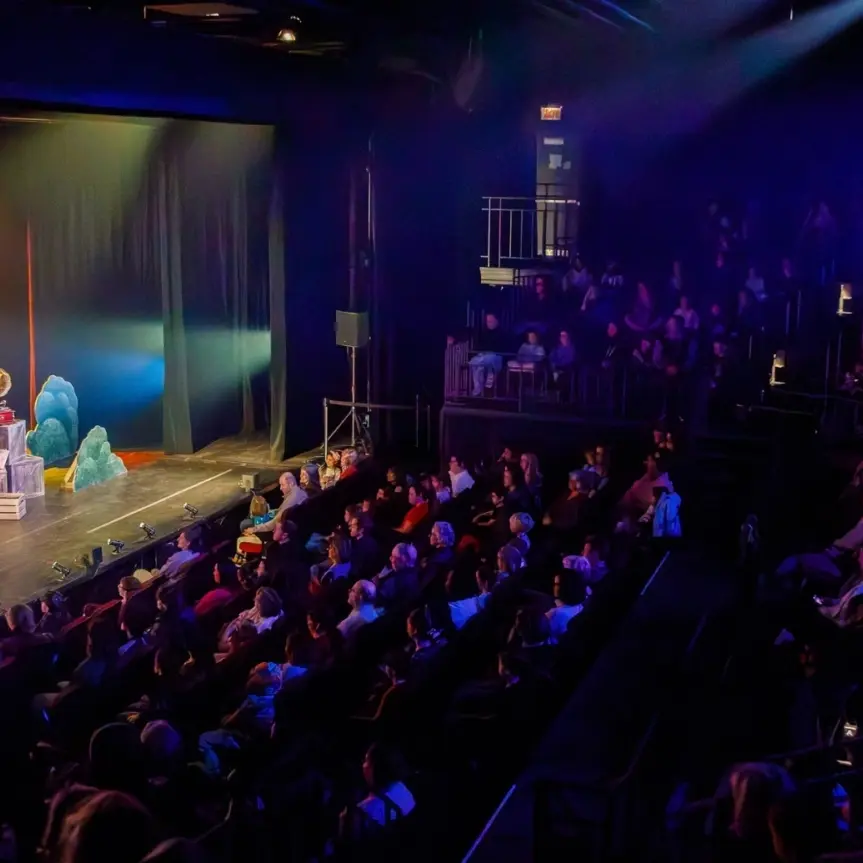
More than ever in 2026, Place des Arts is your go-to family destination. With a rich and varied program for young audiences, it offers families much more than just entertainment.
Article Recommendations Family
Les Quatre Saisons du Québec: Musical Pleasure According to François Dompierre
Article Interviews Event
An Eventful New Season : 12 Ideas for Outings
Article Recommendations Event
MUTEK at the Maison symphonique: Sound in Its Purest Form
For its 27th edition, MUTEK is making a stop at Montreal's Maison symphonique. Spanning three evenings, the festival's X/Visions series will take full advantage of the venue's exceptional acoustics to celebrate sound in its purest form.
Article Recommendations Event
Festival international de jazz de Montréal 2026: The Art of Losing Balance
The Festival International de Jazz de Montréal has never allowed itself to be confined to a rigid framework. People come for the jazz, but also to be swept up in the rhythm of surprising performances. Here is our list of must-sees!
Article Recommendations Festival Your favourites
 Email
Email
 Facebook
 Shared events